In 2027
Leif Ove Andsnes
will become the first musician to have been Artist in Residence at the Bergen International Festival more than once.
Exactly thirty years since he held the title ‘Festival Musician’
In 2027
will become the first musician to have been Artist in Residence at the Bergen International Festival more than once.
Exactly thirty years since he held the title ‘Festival Musician’
A global recitalist, Andsnes has created
audiences whose loyalties are repaid with trust, conversation and often consultation.
his approach to the concerts will feature many 'period instruments'.

Leif Ove Andsnes
and Bergen
Andrew Mellor,
June 10, 2026
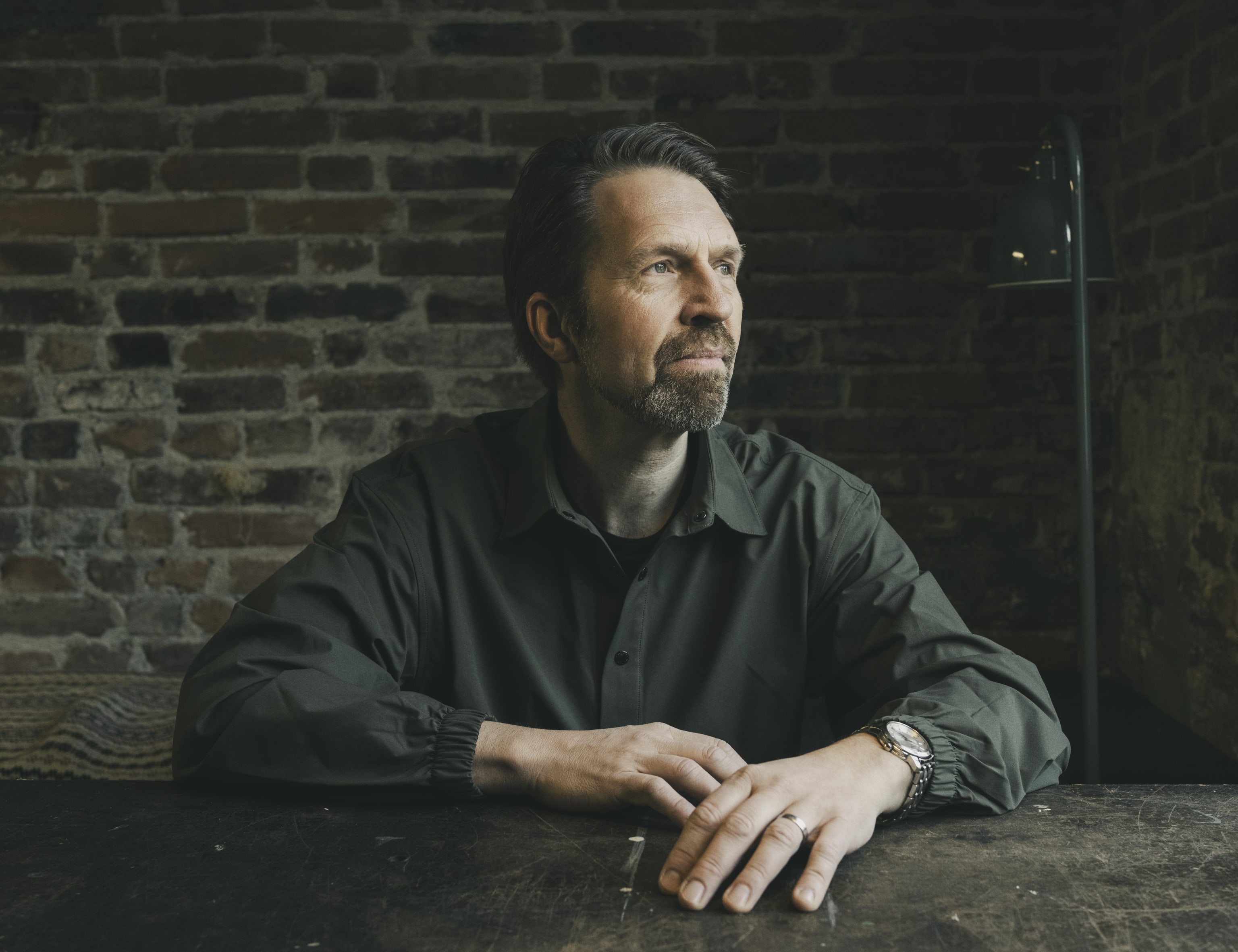
Nearly forty years ago in 1988, a new adult bounded onto stage in Grieghallen to become the Bergen International Festival’s youngest ever concerto soloist. Playing the A minor concerto by Edvard Grieg was, of course, the 18-year-old Leif Ove Andsnes.
In 2027, Andsnes will become the first musician to have been Artist in Residence at the Bergen International Festival more than once – exactly thirty years since he held the title ‘Festival Musician’ in 1997.
Andsnes is more than a success story for Bergen, for Norway and for the Nordic region. He is a giant among pianists whose interpretations and wisdoms are sought out for reasons that have little to do with geography. A global recitalist, Andsnes has created a diaspora of dedicatees around the world – audiences whose loyalties are repaid with trust, conversation and often consultation.
Time and again, Andsnes has demonstrated his rare ability to get to the heart and soul of a musical work, from the pearls of the First Viennese School to the colossal peaks of late Romanticism. The shapely simplicity and limpid beauty of his playing has refreshed the music of Mozart and Beethoven while his sense of command has tamed the most finger-twisting works by Rachmaninoff. His recordings of concertos by all three composers are frequently cited as modern benchmarks.
As a creative artist, Andsnes appears to combine deep patience with restless hunger. It is the pianist’s constant urge to reappraise, says the Festival’s Artistic director Lars Petter Hagen, that led the festival to re-invite him to be Artist in Residence. ‘Leif Ove is always seeking new ways of interpreting music and new insights into that music, while looking for new tools to help him in the process,’ says Hagen; ‘this thirst for constant renewal makes him worthy to be our Artist in Residence for a unique second time.’
As well as arguing the case for rarely-heard piano music by Jean Sibelius and Geirr Tveitt – and commissioning new works from some of the leading composers of our time including Bent Sørensen and Ørjan Matre – Andsnes has started to revolutionize his own approach to music of earlier centuries by playing increasingly on what are referred to as ‘period instruments.’
Across two concerts at the 2027 festival, Andsnes will perform on unique pianos which represented state-of-the-art technology at the time the music in question was being written. What new light will these instruments throw on Andsnes’s long-demonstrated pianistic hallmarks of subtlety and introspection, élan and energy?
Returning to Grieg’s concerto, this time joined by one of the world’s great period instrument orchestras, the Orchestra Révolutionnaire et Romantique, Andsnes will play an 1881 Steinway piano transported specially for the occasion from Belgium. With a different mechanism and resonance – and in combination with the meticulously sourced or reconstructed instruments of the Orchestra Révolutionnaire et Romantique – it will make for an entirely different performance in approach and sound.
Hearing a work like Grieg’s concerto played on the technology for which it was conceived is often compared to seeing the colours of a great painting restored. Andsnes’s deep engagement with the score will combine with his absolutely contemporary musical mind to help re-contextualise a great masterpiece we thought we knew.
Andsnes has played on nineteenth-century pianos before. But his appearance at the 2027 Bergen International Festival with the Chiaroscuro Quartet will constitute his first whole concert with period-specific instruments. The pianist has a newfound interest in the fortepiano – an instrument developed in the late Classical era that transformed the way composers wrote for the instrument. Andsnes will join the quartet – which also plays on period-specific instruments – for quintet music by Luigi Boccherini.
Andsnes owns a fortepiano and describes playing Boccherini’s chamber music on the instrument as his ‘guilty pleasure’. The Italian composer’s piano quintets are gorgeous, overlooked gems of the chamber music repertoire – elegant musical conversations in which refinement reigns supreme. We can expect the sort of crystalline musical poetry and depth of feeling Andnes has brought to Mozart and Beethoven not just to illuminate Boccherini, but to argue the case for his music.
If Bergen feels some sense of ownership of Andsnes, it is reciprocated by his attachment to the city and the seriousness with which he takes his responsibilities to its next generation of pianists. Andsnes’s residency at the 2027 Bergen International Festival will be cemented when he takes his turn, with a litany of other pianists and piano students from the city, in a relay performance of Erik Satie’s epic modernist piano odyssey, Vexations.
Vexations does many things. Perhaps more than any other piece for solo piano, it opens up a space for communal reflection and in which the convergent thoughts of multiple musicians, citizens and visitors can exist unspoken in one space. Vexations functions particularly well as a celebratory exploration of a space and the wider community that surrounds it. In that sense, it provides an apt opportunity for us to consider what an artist like Leif Ove Andsnes means to this city and beyond it.